Complex sound, made intuitive.
Every module is designed to turn complexity into something you can feel your way through, patch a few cables and unique, evolving sounds emerge, so playing feels less like operating gear and more like discovering music.
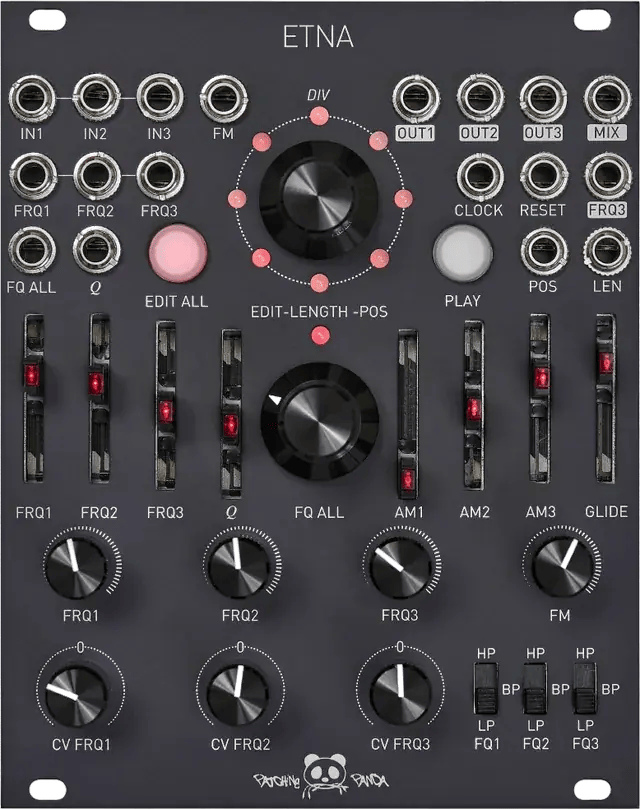
Complex morphing filter.
Three filter cores you can morph between in real time, sweep frequency, blend response shapes, and drive it with CV to turn a static tone into a living, evolving texture you shape as it plays.
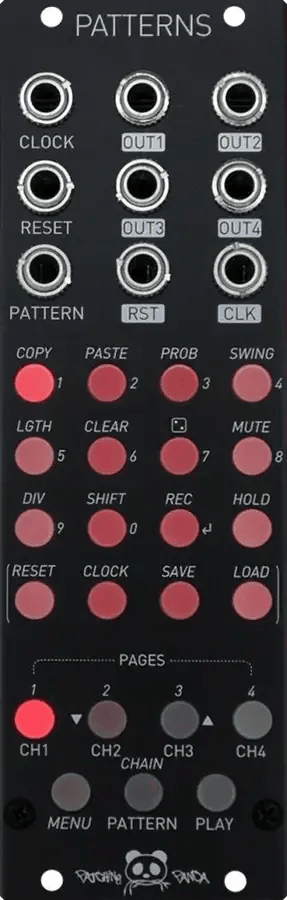
Four-channel grid sequencer.
Four independent CV/gate channels on one grid, each with its own clock, reset and probability, dial in length, swing and per-step mutes, then save the whole pattern to memory and chain pages together into longer arrangements you can recall instantly.
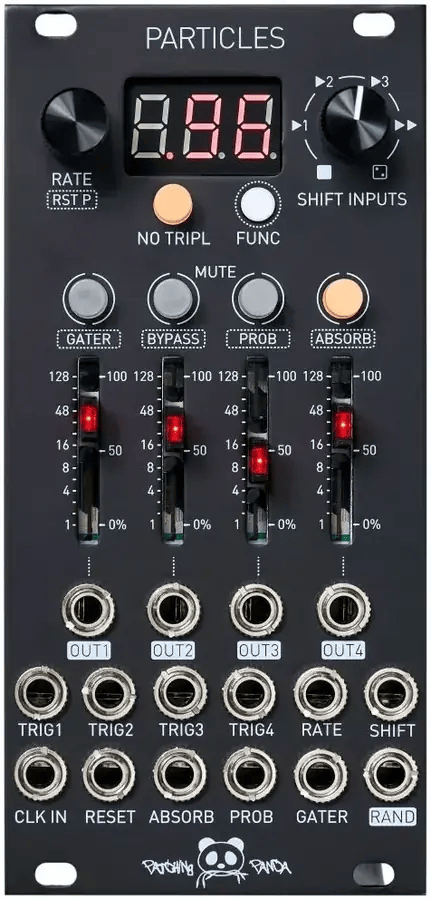
Triggers computing modulation.
Four trigger inputs turned into probability-weighted, gated, bypassed and length-shaped outputs, absorb, shift and randomize the stream on the fly, so the same clock spins off four related but never-identical rhythms instead of one repeating pulse.
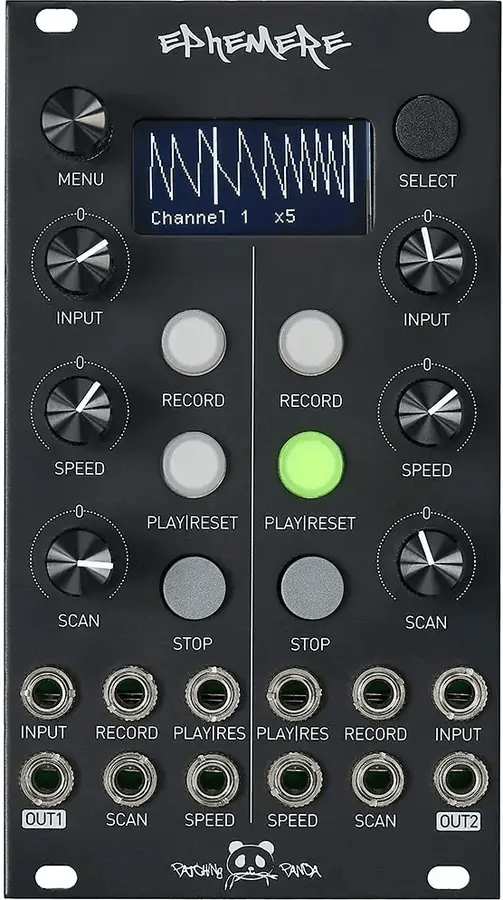
Dual-channel CV recording interface.
Two independent channels for capturing and looping CV or audio-rate signals, record a gesture, a sweep or a whole performance in real time, then scrub, stretch and retrigger it against the clock, so every loop becomes a new source of motion instead of a fixed recording.

Stereo imaging, multimode filtering.
A multimode filter and stereo imager living in one panel, widen or collapse the stereo field, sweep cutoff across both channels together or apart, and shape resonance with CV, so a single source can bloom into a wide, evolving stereo texture.
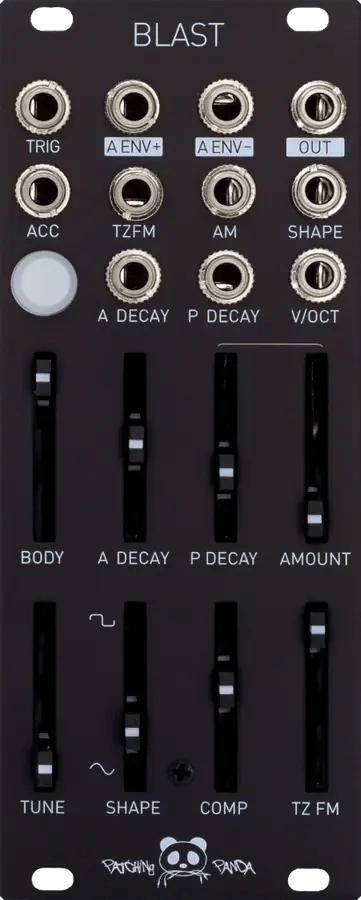
Thoughtful kick drum science.
A kick drum voice with two independent envelopes, TZFM/AM tone-shaping and body resonance working in concert, dial in anything from a sub-tight thump to a snapping, saturated punch, then tune, compress and shape it right on the panel.
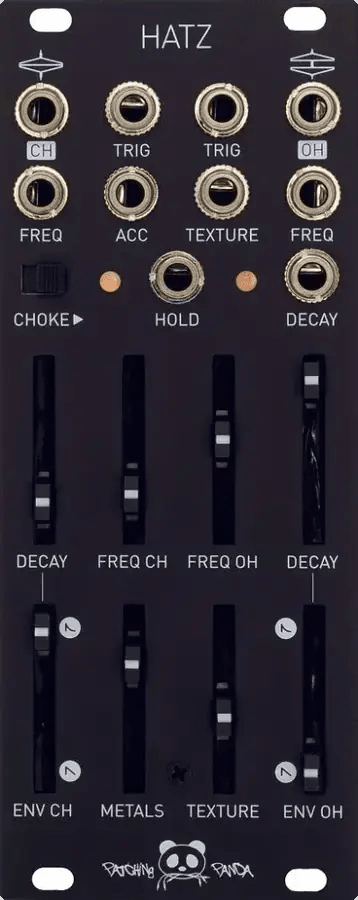
Noise & sizzle synthesis for hi-hats.
Two independent voices, closed and open, built from metallic noise and texture synthesis with real choke behavior, the open hat rings free until the closed one cuts it off, so the pair reads as one physical hi-hat instead of two separate triggers.
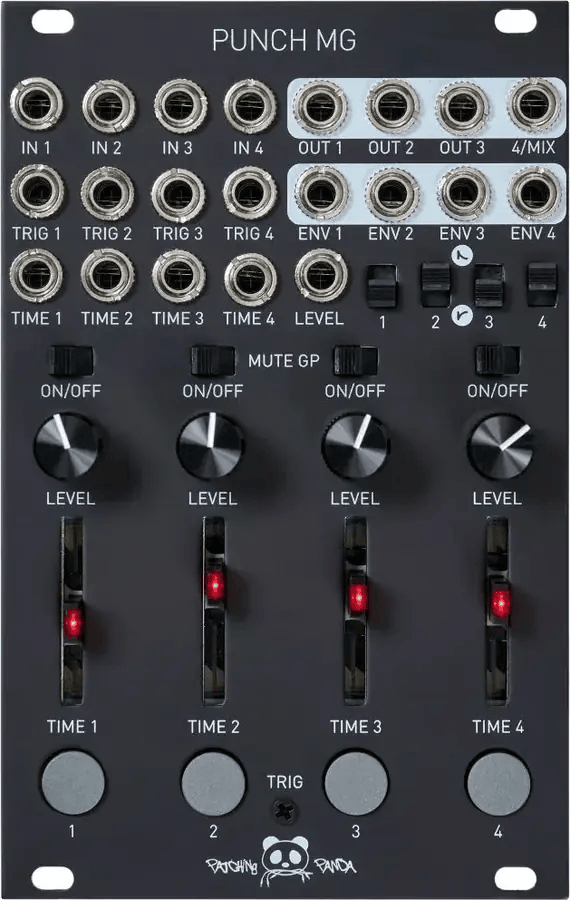
Four-channel VCA and decay.
Four independent VCA/decay channels with per-channel level, time and mute-group control, trigger each envelope on its own or gang channels together under a shared mute group, so a whole drum bus ducks, decays or cuts as one gesture exactly when you need it to.
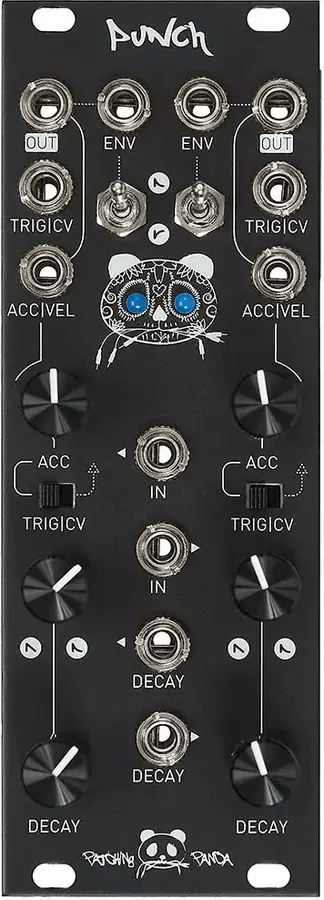
Dual-channel VCA decay, velocity-aware.
Two decay-shaped VCAs that respond to accent and velocity as well as a plain trigger, patch in a sequencer’s accent lane or track incoming velocity, and each hit’s loudness and decay length follow how hard it lands, adding real dynamics to drum and percussion voices.
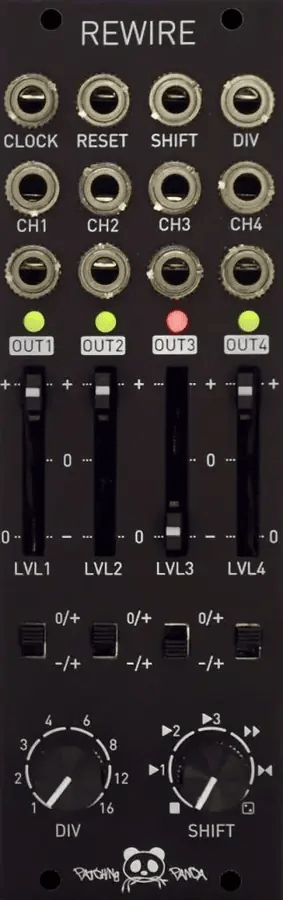
Performative 4×4 signal router.
Four channels of live signal routing with independent level and polarity per channel, plus clock-synced division and shifting on the DIV and SHIFT controls, reroute, invert or rotate what’s patched where in real time, so one patch can restructure itself against the beat instead of staying fixed for the whole set.

Four-channel audio/CV mixer.
Four independent audio or CV inputs summed to one MIX output, each with its own level fader for a fast, precise blend right on the panel, a compact utility for stacking LFOs, folding a submix together, or combining four voices into one line without reaching for a full mixer strip.

Buffered multiple with LED indicators.
Two independent buffered sections, each splitting one input out to three isolated copies, patch a single clock, gate or CV everywhere it’s needed without loading down the source, while an LED on each section confirms exactly what’s live.